





Top 10 mppt charge controller Manufacturers and Supplier Brands
- How MPPT Charge Controllers Work and Why They Matter
- What MPPT does in a PV system
- Efficiency and real-world performance
- Compatibility: battery chemistries and system topologies
- Top 10 MPPT Charge Controller Manufacturers and Supplier Brands
- High Quality / High-performance brands
- Mid-range and OEM-friendly suppliers
- Specialized and niche suppliers
- How to choose the right MPPT Charge Controller
- Match controller to PV array and battery
- Key features: communications, algorithms and safety
- Installation practicality and warranty
- Guangzhou Congsin — A closer look (company & capabilities)
- Company profile and manufacturing capability
- Product families, customization and service
- Quality, certifications and global reach
- Top 10 MPPT Charge Controller product comparison
- Frequently Asked Questions (FAQs)
- 1. Do I always need MPPT instead of PWM?
- 2. How do I size an MPPT for my array?
- 3. Can manufacturers provide OEM/ODM services?
- 4. What certifications should I look for?
- Conclusion
- Contact
Snapshot for : This guide to top MPPT charge controller manufacturers and supplier brands provides geo-relevant, practical buying signals: supplier names, flagship MPPT series, typical current/voltage envelopes, OEM/ODM capabilities and global certifications (ISO9001, CE, EMC). If you are searching for reliable MPPT charge controller suppliers for vehicles, RVs, off-grid homes or OEM partnerships, this report helps you shortlist vendors, compare key specs and understand selection criteria.
How MPPT Charge Controllers Work and Why They Matter
What MPPT does in a PV system
An MPPT (Maximum Power Point Tracking) charge controller is a DC–DC power converter that continuously adjusts the PV operating point so the solar array delivers maximum available power to the battery or inverter. MPPT controllers monitor PV voltage/current and dynamically adjust converter duty cycle to operate near the solar array’s maximum power point under changing irradiance and temperature. For a foundational overview see the Solar charge controller entry on Wikipedia.
Efficiency and real-world performance
Modern MPPT controllers commonly convert 95–99% of available PV energy into battery charge current under ideal conditions; real-world energy gains over basic PWM controllers are often 10–30% depending on panel/battery voltage mismatch, irradiance and temperature. Efficiency depends on converter topology, thermal design and control algorithm. For industry safety and performance context, professional design teams follow standards published by organizations such as the IEC.
Compatibility: battery chemistries and system topologies
MPPT controllers support lead-acid (flooded, AGM, GEL) and lithium chemistries (LiFePO4, Li-ion) with programmable charging profiles and temperature compensation. Choose controllers offering the correct charge algorithms, or ones with configurable setpoints for SOC management. Communication options (Bluetooth, RS485, CAN, Modbus) matter for BMS integration and remote monitoring.
Top 10 MPPT Charge Controller Manufacturers and Supplier Brands
Below are established manufacturers and suppliers widely used across residential, mobile and off-grid markets. Each has product lines that include MPPT charge controllers; they vary by segment focus (high-end, OEM, off-grid, vehicle/RV).
High Quality / High-performance brands
Victron Energy — Known for reliable, feature-rich MPPT controllers (SmartSolar MPPT family). Popular models include the SmartSolar MPPT 100/50 (50 A) and variants providing Bluetooth monitoring. Victron products are widely used in marine, RV and off-grid systems for their robust communications and integration with Victron’s inverter/charger ecosystem. See Victron’s MPPT overview: victronenergy.com.
Morningstar Corporation — Focuses on high-reliability, industrial-grade controllers. Morningstar’s MPPT and TriStar product lines are common in telecom, off-grid and mission-critical installations. Their controllers emphasize durability, stringent thermal design and long warranties. Product details: morningstarcorp.com.
OutBack Power — Strong in off-grid and hybrid systems. The FlexMax series (e.g., FM80) offers high-current MPPT options and integrates with OutBack’s inverter/charge hardware for full system control.
Mid-range and OEM-friendly suppliers
Renogy — Renogy’s Rover MPPT series (e.g., Rover 40A) targets DIY, RV and small off-grid applications. They combine competitive pricing with Bluetooth/monitoring options and a focus on retail channels.
EPEVER / EPsolar — A major China-based manufacturer (sold under EPEVER/EPsolar brands) offering a broad MPPT product portfolio from 10 A to >60 A with digital displays and communications that make them attractive for OEM and system integrators.
Growatt — Primarily known for inverters, Growatt also offers MPPT charge controllers and integrated PV solutions for residential and light commercial systems, often bundled into complete energy storage packages.
Specialized and niche suppliers
Genasun — Specializes in ultra-compact, high-efficiency MPPT charge controllers for off-grid electronics, battery livestock systems and small vehicle installations. Genasun stands out in niche low-power, high-efficiency controllers where size and robustness matter.
MidNite Solar — US-based, focused on solar combiner and charge control products for off-grid and microgrid systems. The Classic MPPT controllers are rugged and intended for installers working on larger off-grid arrays.
Steca Elektronik — European supplier with MPPT controllers designed for small- to medium-sized off-grid systems, offering good European certification coverage and convenience features for installers.
Guangzhou Congsin Electronic Technology Co., Ltd. (Congsin) — Founded in early 1998 and with over 27 years’ experience, Congsin designs and manufactures MPPT solar charge controllers among a wide range of power solutions. Congsin provides OEM/ODM, private labeling and customization for vehicles, RVs, off-grid homes and portable power stations. Their manufacturing uses automated production lines and testing equipment; quality management is ISO9001 certified and many models hold CE, EMC, LVD, ETL, FCC, RoHS and E-MARK marks. Congsin emphasizes integration with inverter systems and delivers models suitable for automotive and off-grid applications globally.
How to choose the right MPPT Charge Controller
Match controller to PV array and battery
Start by matching battery system voltage (12/24/48 V) and maximum PV open-circuit voltage (Voc) to the MPPT’s ratings. Overspec the MPPT current rating by 25–30% compared to expected PV short-circuit current (Isc) to prevent thermal stress. For example, a 50 A-rated MPPT is commonly paired with systems sized to deliver ~35–40 A continuous under typical conditions.
Key features: communications, algorithms and safety
Look for controllers with: programmable charge profiles for LiFePO4 and lead-acid, temperature compensation, remote monitoring (Bluetooth or RS485/Modbus), MPPT algorithms proven under partial shading, and protections (reverse polarity, overload, short-circuit, over-temperature). Communications and logging are critical for long-term performance tuning and warranty support.
Installation practicality and warranty
Consider physical size, cooling strategy (convection vs. forced air), mounting options, and IP rating if the device is near external environments. OEM buyers should verify lead times, MOQ, customization support, testing reports and warranty policy (many reputable vendors provide 3–5 year warranties or extendable options).
Guangzhou Congsin — A closer look (company & capabilities)
Company profile and manufacturing capability
Guangzhou Congsin Electronic Technology Co., Ltd., founded in early 1998, has over 27 years’ experience in DC→AC inverters, portable power stations and solar charge controllers. They run automated production lines and multifunctional test equipment to keep consistency and reliability high. Congsin supports international certifications and has several patents, making them a viable partner for OEM/ODM and private label supply to global markets including Europe, the Americas, the Middle East and Southeast Asia.
Product families, customization and service
Congsin’s catalog includes 100+ power products for vehicles, RVs, trucks, off-grid homes and field operations. Their MPPT charge controller lines typically cover a range suitable for small mobile systems up to larger off-grid arrays, with options for LiFePO4 charging profiles, Bluetooth monitoring modules, and integration options for inverters and battery management systems. They provide distribution, technical support and custom firmware/hardware options for partners.
Quality, certifications and global reach
Congsin’s quality system is ISO9001 certified (ISO). Many products hold CE, EMC, LVD, ETL, FCC, RoHS and E-MARK approvals. These certifications are important when selecting suppliers for international projects or EV/vehicle-mounted applications.
Top 10 MPPT Charge Controller product comparison
Below is a concise comparative table summarizing each company’s representative MPPT product series to help shortlist suppliers. Values are typical published envelopes or common flagship model specs (for precise model selection always check the manufacturer’s datasheet).
| Company | Representative Product / Series | Typical Max Current | PV Input Voltage (typical) | Comm. / Features | Best for |
|---|---|---|---|---|---|
| Victron Energy | SmartSolar MPPT (e.g., 100/50) | Up to 50 A (common models) | Up to 100 V (model dependent) | Bluetooth, VE.Direct, robust monitoring | Marine, RV, high-reliability off-grid |
| Morningstar | TriStar / MPPT series | Up to 60 A+ (industrial models) | Wide input (model dependent) | Industrial-grade, remote comms | Telecom, remote off-grid |
| OutBack Power | FlexMax (e.g., FM80) | ~80 A | High-voltage capable (system dependent) | System integration with inverters | Off-grid microgrids, hybrid systems |
| Renogy | Rover MPPT | Commonly 20–40 A models | Typically up to ~100–150 V | Bluetooth option, LCD | RV, caravan, DIY home systems |
| EPEVER (EPsolar) | Tracer / AN series | 10–60+ A | Varies by model; many support 100–200 V | LCD, Modbus, LCD+Bluetooth optional | OEM, installers, budget-conscious integrators |
| Genasun | GT / GV compact MPPTs | Small systems, 1–30 A | Designed for low-voltage arrays | High-efficiency, small-footprint | Specialty electronics, small off-grid |
| MidNite Solar | Classic MPPT series | Medium to high current models | Supports large PV arrays | Durable, installer-focused features | Large off-grid, system integrators |
| Steca | Steca MPPT lines | Small to medium currents | Typical small off-grid ranges | European certification focus | Small cabins, rural electrification |
| Schneider Electric | Conext MPPT series | High-current industrial models | Commercial PV ranges (varies) | Enterprise-grade comms, system support | Commercial / large RES installations |
| Guangzhou Congsin | Congsin MPPT series (vehicle, RV, off-grid) | Models for small to medium systems (typical 10–80 A ranges) | Designed for 12/24/48 V systems; PV input varies by model | OEM customization, battery profiles, optional comms | OEM/ODM, vehicle-mounted systems, distributors |
Frequently Asked Questions (FAQs)
1. Do I always need MPPT instead of PWM?
No — PWM controllers are simpler and cheaper for small, voltage-matched PV/battery systems (e.g., a 12 V 12-cell panel charging a 12 V battery). But for most modern systems with higher PV voltages, long cable runs or partial shading, MPPT controllers extract significantly more energy and are worth the investment.
2. How do I size an MPPT for my array?
Determine the battery system voltage and expected maximum charge current, then select a controller rated above that current. Also ensure the MPPT’s maximum PV Voc rating exceeds your array’s cold-weather Voc. Oversize the current rating by ~25% for safety and reliability.
3. Can manufacturers provide OEM/ODM services?
Yes — many suppliers (including Guangzhou Congsin and EPEVER) offer OEM/ODM, firmware customization, private labeling and sample programs. Verify minimum order quantities, lead times, documentation and certification support for target markets.
4. What certifications should I look for?
Product safety and EMC marks (CE, EMC, UL/ETL for North America), RoHS and relevant vehicle approvals (E-MARK) are important for compliance. Supplier-level quality (ISO9001) indicates consistent manufacturing processes.
Conclusion
Choosing the right MPPT charge controller requires balancing system size, reliability needs, communications and budget. High Quality brands like Victron and Morningstar offer proven products for critical systems; mid-range suppliers such as Renogy and EPEVER deliver competitive features for RV and small off-grid uses; niche suppliers like Genasun and MidNite serve specialized requirements. For OEM and private-label partnerships, experienced manufacturers such as Guangzhou Congsin provide end-to-end design, production and certification support, backed by ISO9001 quality management and global approvals.
If you need to compare datasheets for specific models or evaluate OEM partnership options, contact the manufacturer or authorized distributor and request full datasheets, test reports and certification copies.
References:
- Solar charge controller — Wikipedia
- Victron Energy — Solar charge controllers
- Morningstar — Solar charge controllers
- International Electrotechnical Commission (IEC)
- ISO 9001 — Quality management
Contact
Ready to discuss MPPT controllers, OEM options or technical sizing? Contact us to get tailored recommendations and quotes.
Improving Efficiency: Batteries and Pure Sine Wave Inverters
Top 10 pure sine wave inverter Manufacturers and Supplier Brands
2000W Modified Sine Wave Inverter: Buyer’s Complete Guide
Sizing Off-Grid Inverters: Calculate Load, Battery & Solar Needs
Modified Sine Wave Inverters
Can it be used with a car cigarette lighter socket?
Yes, it supports both battery clip and cigarette lighter connection.
What is the difference between modified sine wave and pure sine wave?
Modified sine wave is suitable for most ordinary home appliances and electronic devices; pure sine wave is suitable for devices with extremely high power requirements (such as precision instruments). This modified sine wave is more cost-effective and meets the needs of most daily scenarios.
Which region’s voltage standards does it support?
It defaults to AC 220V output, suitable for regions with 220V voltage standards such as China and Europe; it can also be customized to output AC 110V, suitable for regions with 110V voltage standards such as the United States and Japan.
Distributor
What kind of support can I expect from Feifan after becoming a distributor?
You will receive ongoing sales support, product training, technical assistance, and marketing resources to ensure your success.
Pure Sine Wave Inverters
Can it be used in RVs or trucks?
Yes. The device input voltage is DC 12V, which matches the battery voltage of RVs and trucks. It can be connected via battery clips or cigarette lighter interface (need to confirm that the maximum current of the cigarette lighter is ≥10A) to supply power to car refrigerators, parking air conditioners, laptops, etc.
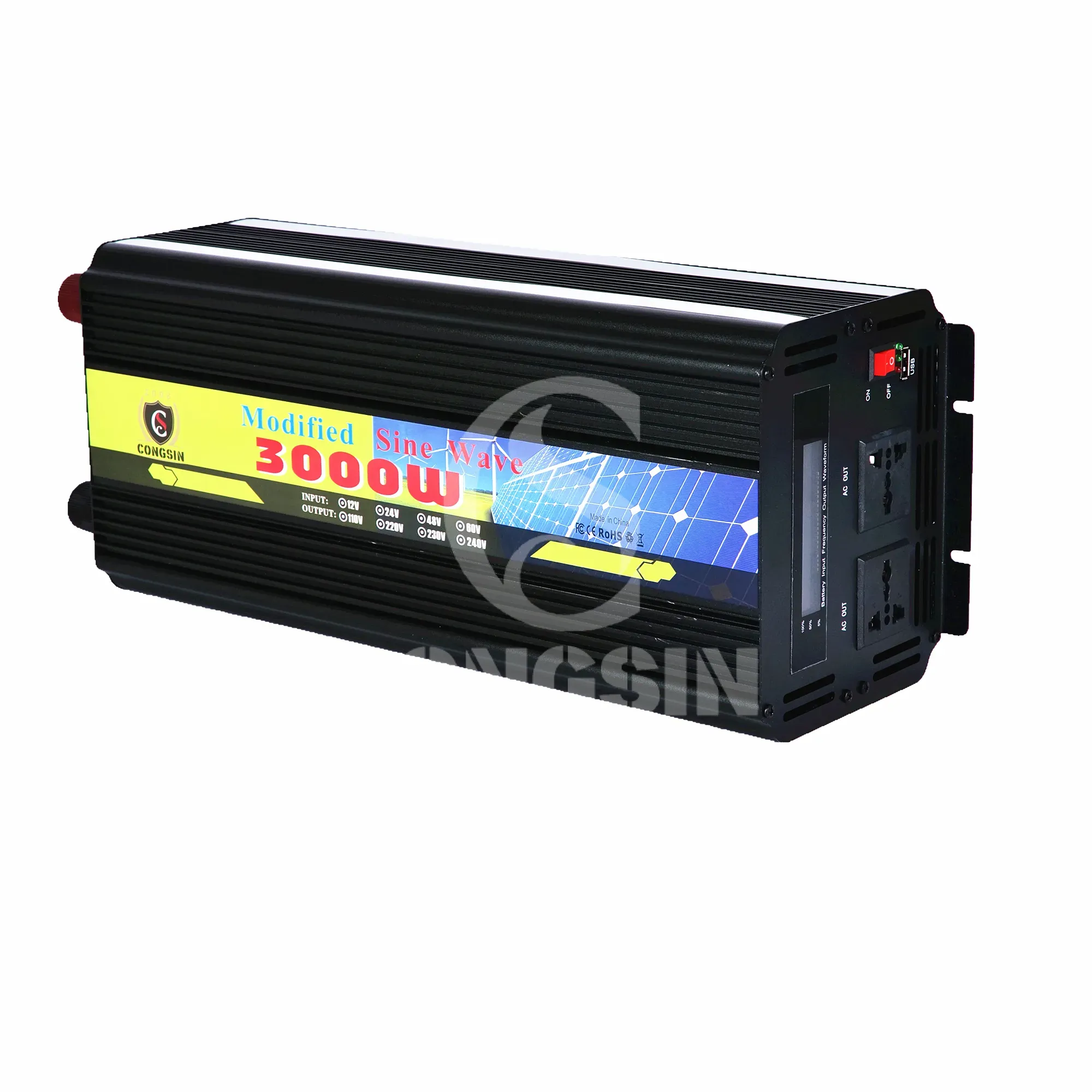
Congsin Full Power 3000W Modified Sine Wave Inverter Peak Power 6000W with LCD Display RV Solar
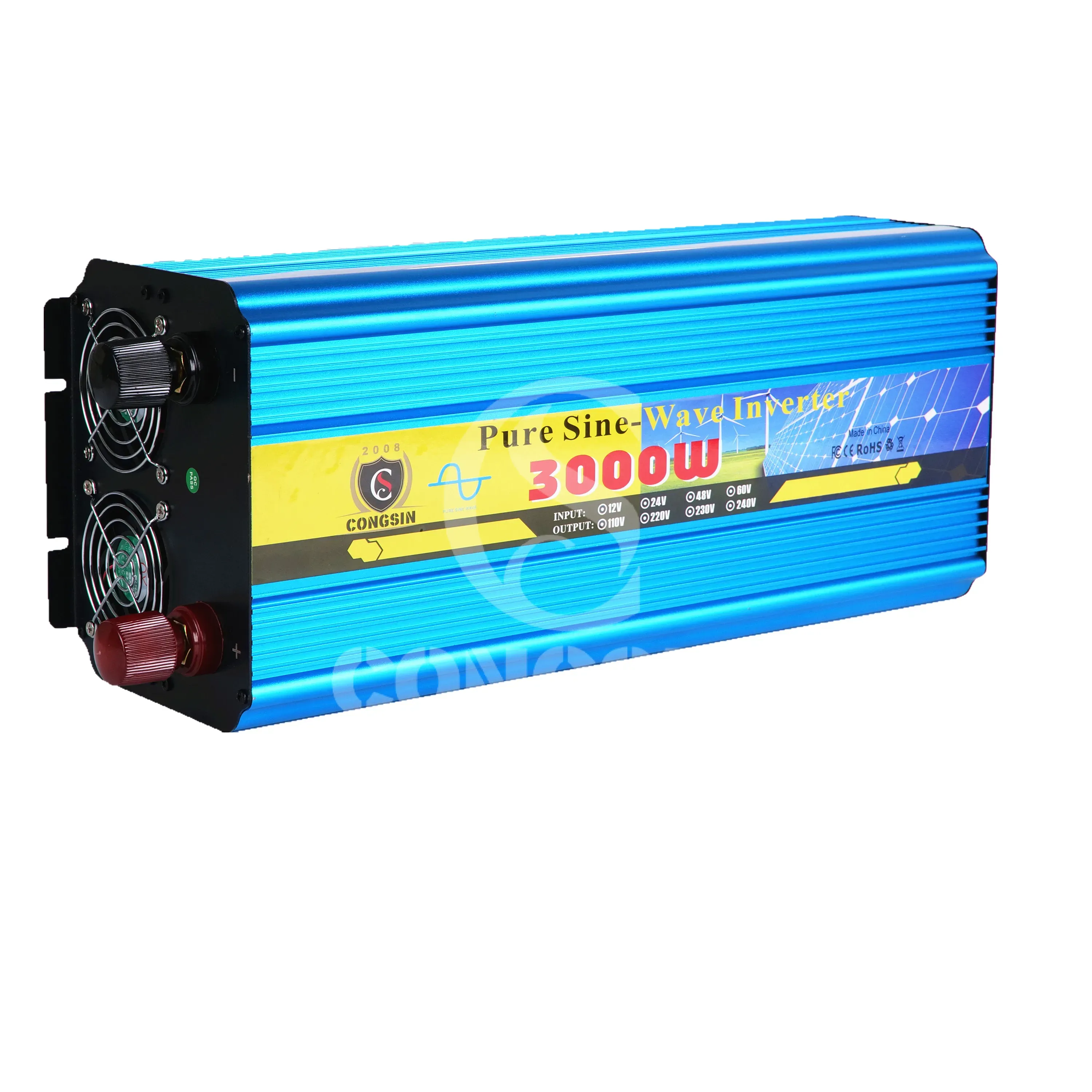
Congsin 3000W LCD Pure Sine Wave Inverter for Home Use Solar Backup Power Inverter Off Grid UPS
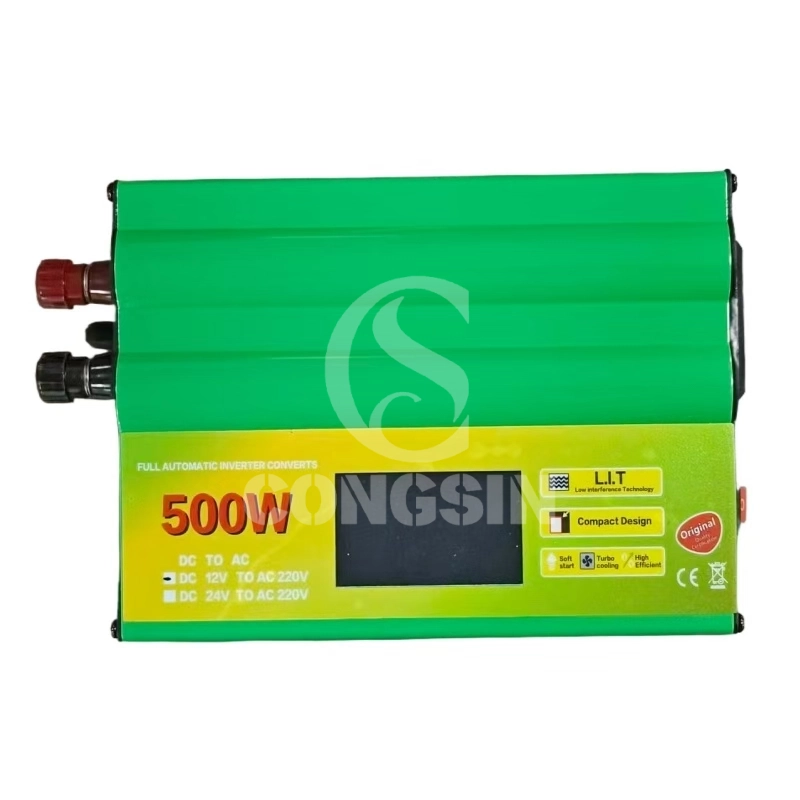
Congsin Modified Sine Wave Inverter 500W 1000W 1500W 12V LED Display Portable for RV Car Solar
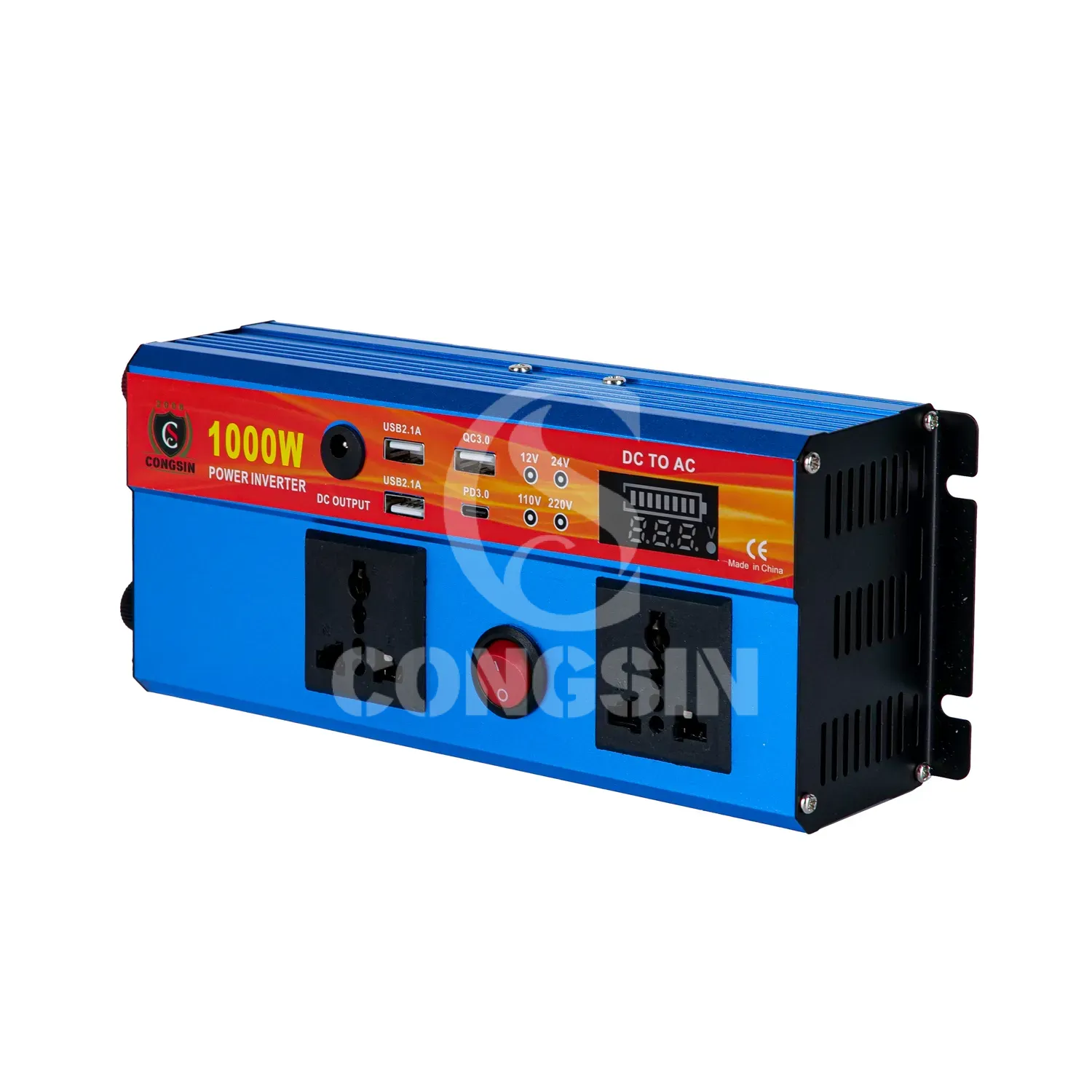
Congsin 1000W modified sine wave inverter with LED display and Type C port car RV power inverter

CONGSIN is a trusted OEM factory for power inverters, solar charge controllers, and DC converters. Reliable solutions for global B2B buyers.
 High Quality
 7/24 Service
 Guaranteed Warranty
© 2025 Congsin. All Rights Reserved.